


Private Jet Charter vs First Class: Cost Breakdown & Route Efficiency

For senior executives, entrepreneurs, family office principals, and high-net-worth individuals (HNWIs), choosing between a commercial First Class suite and a private aircraft charter involves more than comparing cabin comfort. Leading international airlines offer impressive First Class products, including Emirates’ Private Suites on selected aircraft, Air France’s La Première, and Singapore Airlines’ A380 Suites. Depending on the route and aircraft configuration, these experiences may include fine dining, fully flat beds, private cabin spaces, dedicated airport services, and premium lounges.
The main appeal of private jet charter is different: the ability to save time and tailor the journey to specific requirements. Commercial First Class remains tied to scheduled airline services, designated airports, and standard passenger procedures. A private charter offers greater flexibility in departure times, aircraft selection, routing, and airport choice, subject to operational restrictions and availability.
This guide compares the financial and logistical aspects of commercial First Class and private jet charter. It examines indicative hourly charter rates, additional operating costs, airport procedures, route flexibility, and the factors that determine whether a private aircraft makes financial sense for a group.
The Core Operational Differences: Time, Security, and Airport Access

The main distinction between private charter and commercial First Class lies in how the journey is arranged and how passengers move through the airport.
FBO vs Commercial Terminal
- Commercial First Class: Priority check-in and access to dedicated airport services may reduce waiting times, but passengers must still follow the airline’s recommended arrival schedule and complete the standard security and border procedures.
- Private Jet Charter: Passengers use a Fixed Base Operator (FBO) or a dedicated business aviation terminal. At some airports, arrival shortly before departure may be possible, but the recommended time depends on the airport, route, and required formalities.
Airport Accessibility
- Commercial Airlines: Operate through airports served by scheduled airline services, with routes determined by the carrier’s network.
- Private Aircraft: Can use a wider selection of regional airports and business aviation facilities, provided the runway, aircraft performance, airport operating hours, and border-control arrangements permit the flight.
Schedule Flexibility
- Commercial First Class: Flights operate according to published airline schedules. Missing a departure may require rebooking under the applicable fare conditions.
- Private Jet Charter: Departure times and routing can be arranged around the passenger’s requirements. Changes remain subject to aircraft availability, airport slots, crew duty limits, operating hours, weather, and the charter agreement.
Onboard Privacy and Security
- Commercial First Class: Offers a high level of personal space, with enclosed suites available on selected airlines and aircraft. Passengers still use commercial terminal and boarding procedures.
- Private Jet Charter: Provides an aircraft cabin reserved for the booking party, allowing passengers to travel without sharing the space with unrelated customers. Private terminal services may offer a more discreet airport experience, while all applicable identity, security, customs, and immigration requirements remain in force.

FBO Terminals and Ground Efficiency
Commercial First Class passengers benefit from priority check-in counters, dedicated lounges, and, at some airports, fast-track security services. However, they still use the main commercial airport infrastructure and must comply with the airline’s check-in and boarding deadlines. The time required varies by airport, destination, carrier, and departure conditions, so there is no universal 90- or 120-minute arrival rule for all First Class passengers.
Private charter flights are typically handled through Fixed Base Operators (FBOs)—specialist facilities serving business and general aviation. These terminals are often separate from the main passenger areas and provide services such as passenger reception, baggage handling, lounges, aircraft coordination, and access to customs or immigration facilities where available.
At airports such as Farnborough, passengers can be welcomed at a dedicated terminal, relax in the lounge while departure formalities are completed, and proceed to the aircraft with airport staff. The exact process depends on the airport and the flight.
International private flights still require the relevant passenger information and border formalities. For example, international general aviation flights to and from the UK are subject to advance reporting requirements through the General Aviation Report (GAR) system. The information must be submitted within the prescribed time window, and passengers must still meet the applicable immigration and customs requirements. Advance digital reporting does not mean that all border checks have been completed automatically.
The practical advantage of an FBO is a more controlled and often faster ground experience, rather than exemption from airport procedures.
Direct Point-to-Point Routing
Commercial airlines generally operate through established networks connecting major airports. For some destinations, this means a connecting flight or an additional ground journey after landing.
Private aircraft may be able to use regional airports closer to the final destination, reducing the need for additional transfers. However, not every aircraft can operate from every airfield. Runway length, elevation, aircraft performance, weather, airport opening hours, and customs facilities all affect route planning.
A useful example is St. Moritz. Commercial passengers commonly fly to Zurich Airport (ZRH) and continue by road, with the drive taking approximately three hours depending on conditions. A suitable private aircraft may be able to land at Engadin Airport in Samedan (SMV), located close to St. Moritz.
Samedan is a high-altitude Alpine airport at 1,707 metres above sea level. Its location and approach environment impose specific operational requirements, so a direct arrival is not suitable for every aircraft or every weather condition. The airport also has defined operating hours, and flight planning must take these into account.
For destinations such as Courchevel, similar considerations apply: access to specialist mountain airfields depends on the aircraft, crew qualifications, weather, and local operating rules. Monaco, by contrast, has no airport for conventional aircraft landings; private aviation passengers generally use nearby airports and may continue by helicopter or road.
Financial Anatomy: How Costs Are Calculated
A meaningful comparison between commercial First Class and private jet charter requires looking at two different pricing models:
- Commercial First Class: Tickets are priced per passenger and per flight segment.
- Private Jet Charter: The aircraft is chartered as a whole, with the final price depending on flight time, aircraft category, positioning, airport charges, and other operating costs.
Commercial First Class: Per-Seat Pricing
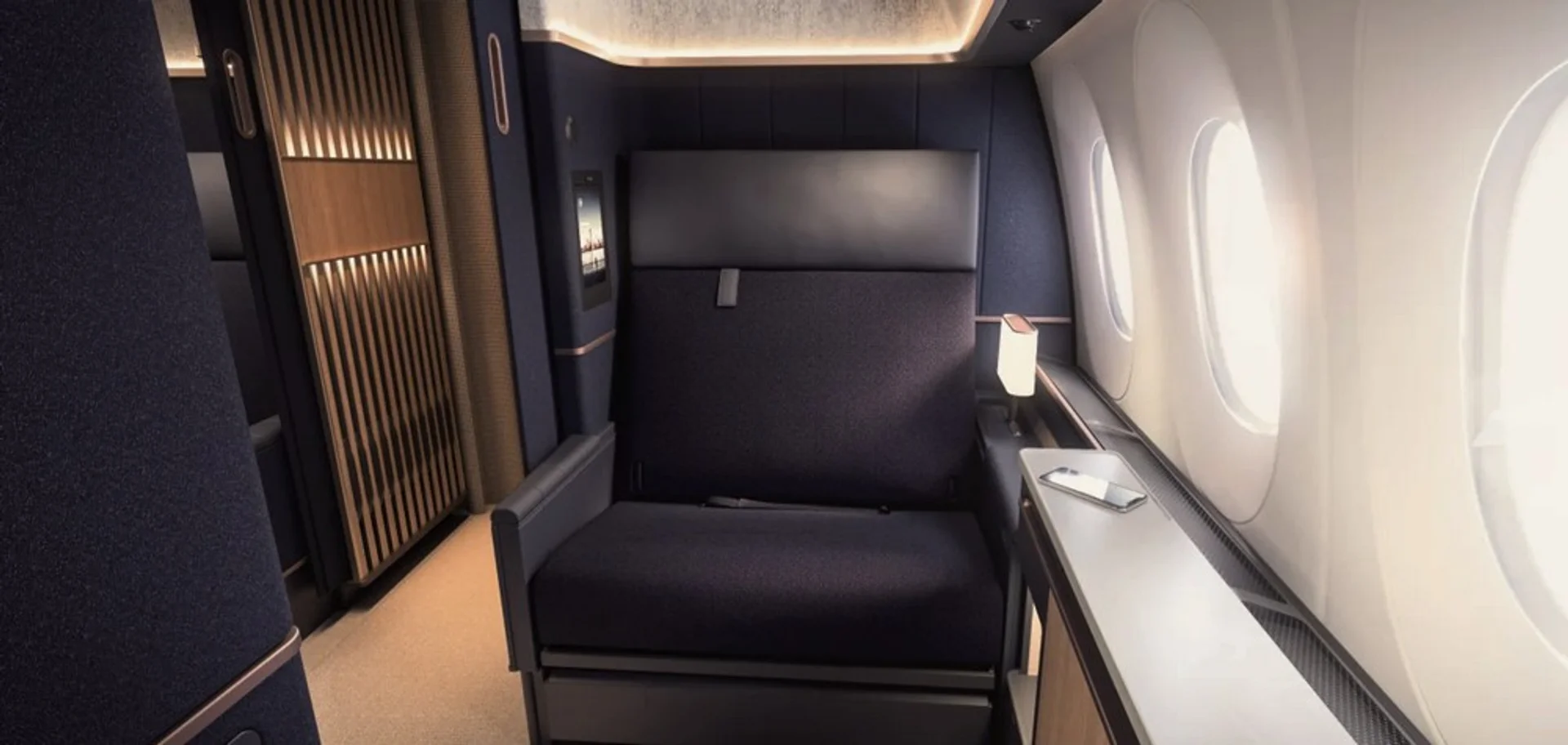
Commercial First Class fares vary substantially according to the airline, route, travel dates, booking window, and availability. Some airlines offer First Class only on selected long-haul routes and aircraft, while Business Class may be the highest available cabin on shorter or regional services.
A First Class ticket generally includes the flight and the services specified by the carrier, which may include premium dining, lounge access, priority airport services, and an enhanced baggage allowance. The exact inclusions depend on the airline, route, and fare conditions.
For this reason, there is no reliable universal price range for routes such as London–Dubai or London–New York. A meaningful comparison should use actual fares for the same dates, airports, passenger count, and cabin class.
The cost model remains straightforward: each additional passenger requires another ticket. Booking four seats therefore means paying for four individual fares, subject to any applicable group or corporate arrangements.
Private Jet Charter: Aircraft and Hourly Rates
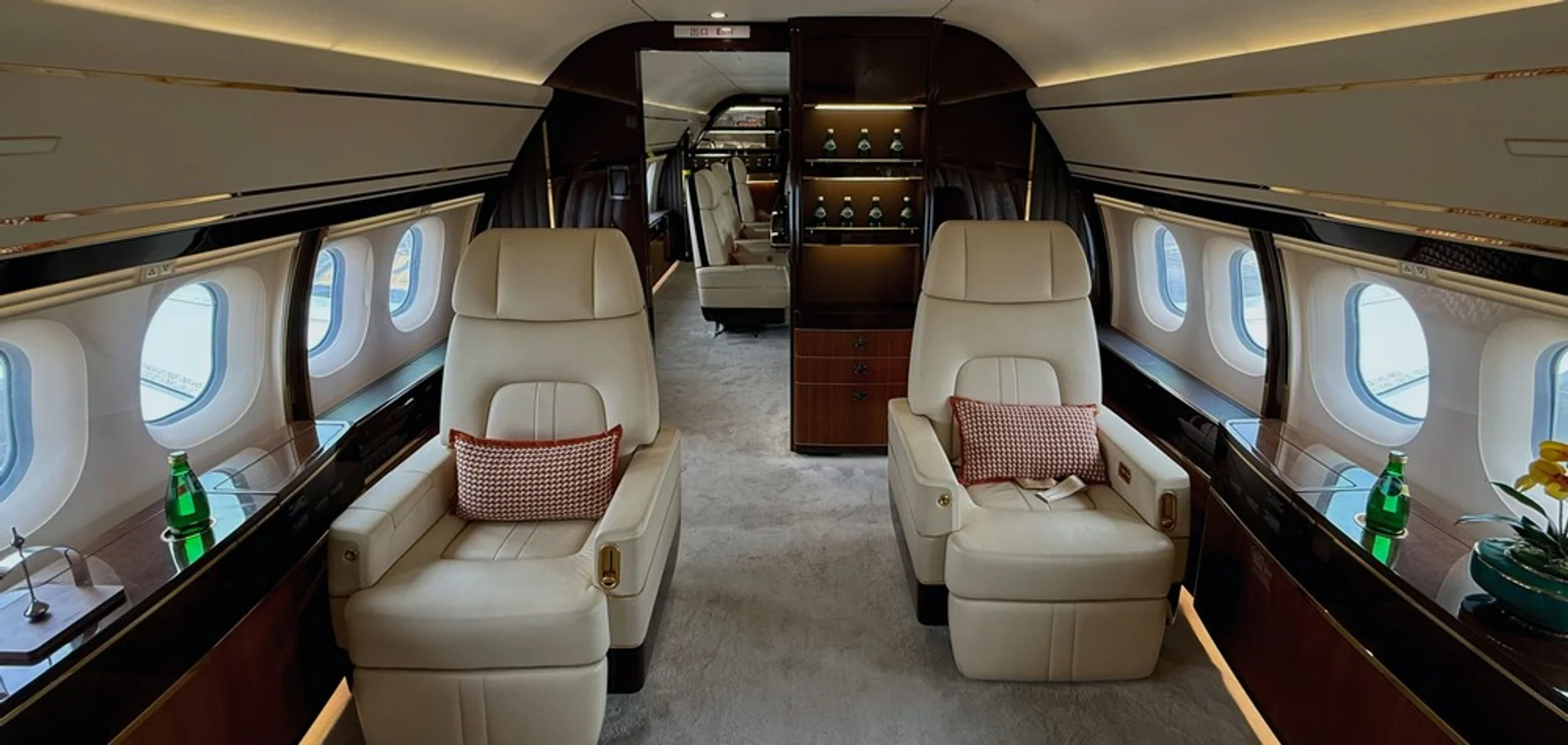
A private aircraft is chartered as a whole, regardless of how many available passenger seats are occupied. The core charge is usually calculated by flight or block hours, with the total quote depending on the aircraft, route, schedule, and operator.
The following are indicative 2026 market ranges in USD per block hour. They are planning references rather than guaranteed prices. Actual offers vary by region, aircraft availability, operator, season, and contract terms.
- Light Jets — Phenom 300, Citation CJ4: approximately 4,200–6,200 per hour.
- Midsize Jets — Praetor 500, Citation Latitude, Hawker 900XP: approximately 6,000–8,200 per hour.
- Super-Midsize Jets — Praetor 600, Challenger 350: approximately 7,500–10,500 per hour.
- Heavy Jets — Falcon 900LX, Challenger 650: approximately 9,000–12,500 per hour.
- Ultra-Long-Range Jets — Global 7500, Gulfstream G650ER: approximately 13,500–22,000 per hour.
An hourly rate is only one component of the final charter price. The quote should specify which costs are included, such as aircraft, crew, fuel, and standard operating expenses, and which are billed separately.
Additional direct costs may include:
- FBO Facility and Handling Fees: Charges for private terminal services, ramp handling, passenger assistance, and baggage transfer. These vary by airport, aircraft, and service package.
- Positioning Fees (Ferry Flights): If the aircraft is not based at the departure airport, the operator may charge for the empty flight required to bring it to the pick-up location. The quote should show whether this cost is included.
- Overnight Crew Expenses: Hotel accommodation, per diem allowances, and ground transport may be charged when the crew needs to remain at the destination between flight legs.
- De-Icing Charges: If snow, ice, or frost accumulates on the aircraft, de-icing may be required before departure. The cost depends on aircraft size, the amount and type of fluid used, airport charges, and weather conditions.
- Taxes and Regulatory Charges: Depending on the route and date, the total may include VAT, passenger taxes, overflight permits, and other applicable charges. For flights departing from the UK, Air Passenger Duty (APD) rules should also be checked. From 1 April 2027, the higher APD rate is due to apply to private and business jets weighing 5.7 tonnes or more.
A detailed charter quotation should list these items separately so the client can see the total cost before confirming the booking.
The Break-Even Analysis: Group Size and Routing Math

Private jet charter can become more financially competitive when several passengers share the aircraft cost. It may also offer substantial practical value when the alternative involves multiple connections, lengthy ground transfers, or several separate commercial bookings.
However, there is no universal passenger threshold at which private charter becomes cheaper than First Class. The result depends on the route, travel dates, airline fares, aircraft category, positioning costs, and number of passengers.
A useful way to compare the options is to calculate:
Private charter cost per passenger = Total charter cost ÷ Number of passengers
This figure can then be compared with the combined cost of commercial tickets for the same travel dates and a comparable itinerary. The private charter total should include positioning, airport handling, taxes, and other applicable charges.
Strategic Decision Checklist: Which Option to Choose?
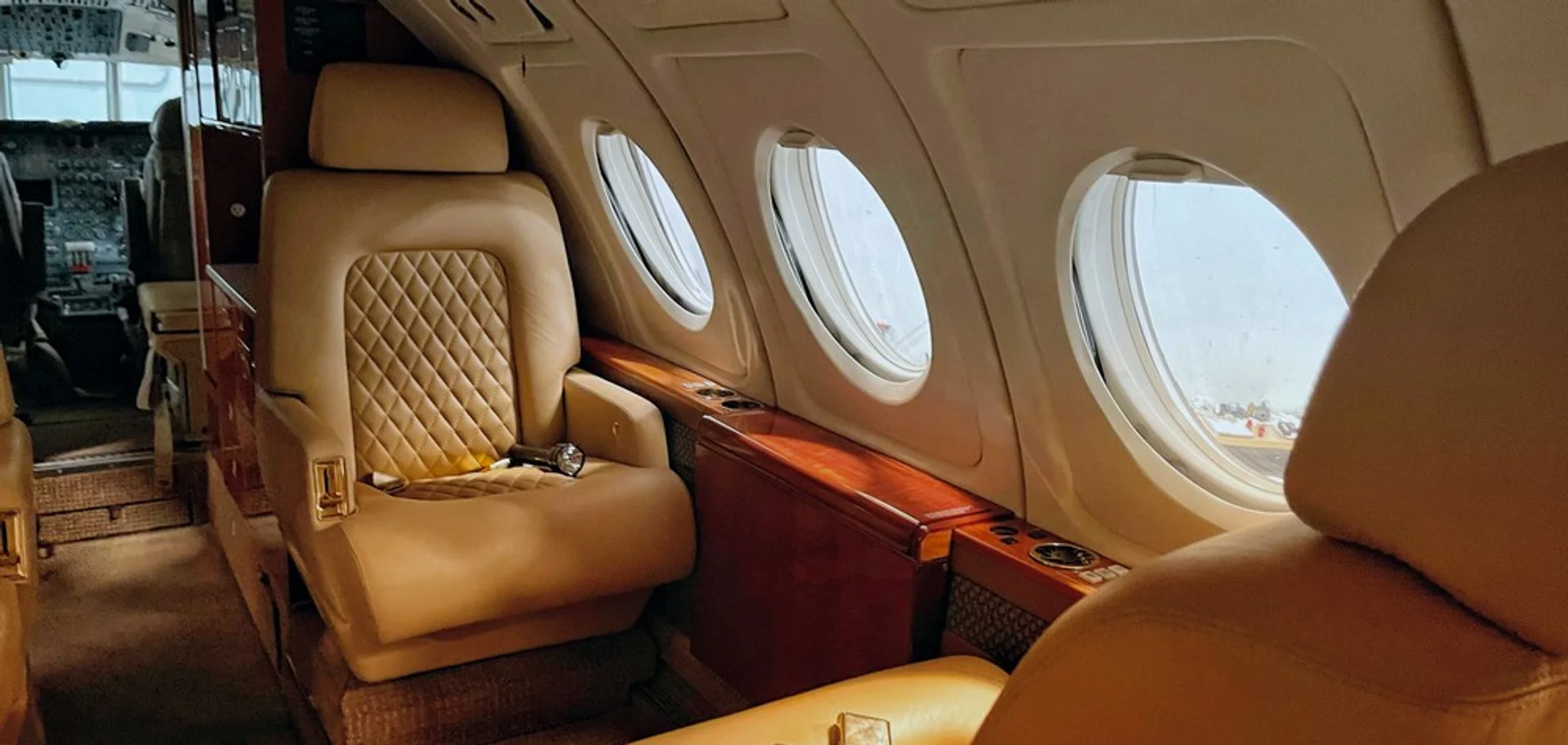
When deciding between a commercial First Class ticket and a private aircraft charter, consider the following factors:
- Number of Passengers: Compare the total price of commercial tickets with the full aircraft charter cost divided by the number of passengers. Do not assume that a particular group size automatically makes private aviation more economical.
- Route Directness: Check whether the destination has a suitable regional airport. If the commercial journey requires connections or a lengthy ground transfer, a private charter may save considerable time, provided the chosen aircraft can use the alternative airfield.
- Schedule Flexibility: If meetings may run over time or the itinerary includes several destinations, private aviation offers more scope to adjust departure times. Changes remain subject to aircraft availability, crew duty limits, airport slots, operating hours, and the charter agreement.
- Need for Confidentiality: Commercial First Class offers a high level of personal space, but passengers still travel within a shared commercial aviation environment. A private charter reserves the cabin for the booking party and may be more suitable for sensitive discussions, subject to the communication and security arrangements in place.
- Empty Leg Opportunities: If travel dates and departure times are flexible, ask about available Empty Leg flights. These are positioning sectors operated without the passengers from the original booking. They may be offered at a reduced price, but the route and departure time are fixed, availability is limited, and a change to the original charter may affect the Empty Leg. A lower fare should not be treated as a guaranteed discount on a preferred itinerary.
Seamless Private Aviation Management with Versently

Navigating the private aviation market requires careful coordination—from selecting an aircraft suited to the route and passenger requirements to reviewing the operator’s documentation and understanding the full scope of airport and handling charges.
Versently provides dedicated lifestyle management and private flight coordination for corporate executives, family office principals, and international travellers. Our team can assist with the key elements of private travel:
- On-Demand Aircraft Sourcing: Coordination of charter quotations from appropriately licensed operators, with aircraft options matched to the route, passenger capacity, baggage requirements, and flight range.
- Empty Leg Monitoring: Identification of available positioning flights that may offer a more cost-effective way to travel when the route and departure schedule suit the client.
- Ground Logistics and Inflight Catering: Chauffeur transfers to and from private aviation terminals, onward helicopter connections where available, and tailored inflight catering arrangements with selected service providers.
Contact the private client team at Versently to discuss your itinerary and explore the most suitable travel arrangements.